Category:
DevSecOps
Client:
Reliance Industries Limited
Introduction
In today’s rapidly evolving IT world, security and compliance are paramount. Traditional development and operations models are insufficient to handle the increasing cyber threats and regulatory requirements. This project aims to establish a DevSecOps practice using Azure DevOps to enhance security, streamline operations, and ensure continuous compliance.
"DevSecOps is the union of people, process and products to enable continuous delivery of value to your end users" - Donovan Brown
My Approach
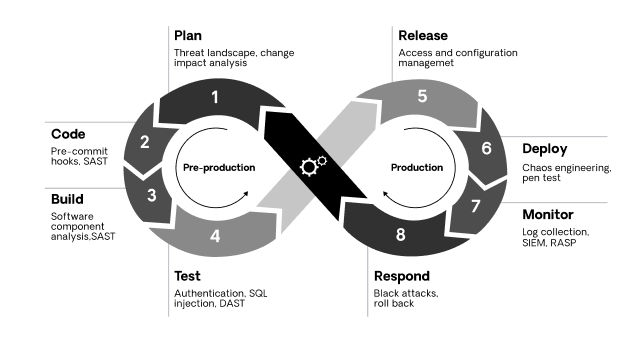
Implementing a robust DevSecOps practice is crucial for India's largest private sector conglomerate to ensure the security and reliability of its applications. My approach is how to leverage Azure DevOps to integrate security into every phase of the software development lifecycle (SDLC), fostering collaboration between development, security, and operations teams.
Vision
The core vision of this project is to integrate security into every phase of the software development lifecycle (SDLC) while optimizing performance and maintaining accessibility.
Our objective is to:
Embed security in CI/CD pipelines.
Ensure seamless collaboration between development, security, and operations teams.
Achieve automated compliance with industry regulations.
Enable real-time threat monitoring.
Enhance system resilience with proactive vulnerability management.
Approach
Infrastructure as Code (IaC): Automate environment provisioning using Terraform.
Automation: Automatic creation of repository with standard folder structure with sample code, build pipeline, release pipeline with approval groups, artifact creation and authorization provisioning in various InfoSec tools.
CI/CD Security Integration: Embed static (SAST) & dynamic (DAST) analysis, software composition analysis (SCA) in Azure Pipelines.
Flexibility : Various deployment related configuration parameters (e.g. memory, cpu, hpa, volume mount, port, k8s cluster & namespace, # of replicas, artifact repository, api gateway) can be defined/controlled by Technical Lead for better resource management.
Approval Matrix : Defined the approval matrix for deploying the artifact into various environment i.e. development, staging, UAT/Replica & Production.
Templatization : templatization of build and release pipeline for various technology i.e. Node JS, Spring Boot, Go, Python, Angular JS, React JS, DotNet Core, Flutter, Database, Kubernetes kinds (config map, secrets, gateway service, virtual service, HPA, CRON job), SAP Transport etc.
Single Build, Multiple Deployment approach
Challenges & Complex Problems
Legacy Systems Integration
Problem: Older applications in the manufacturing often lack security frameworks.
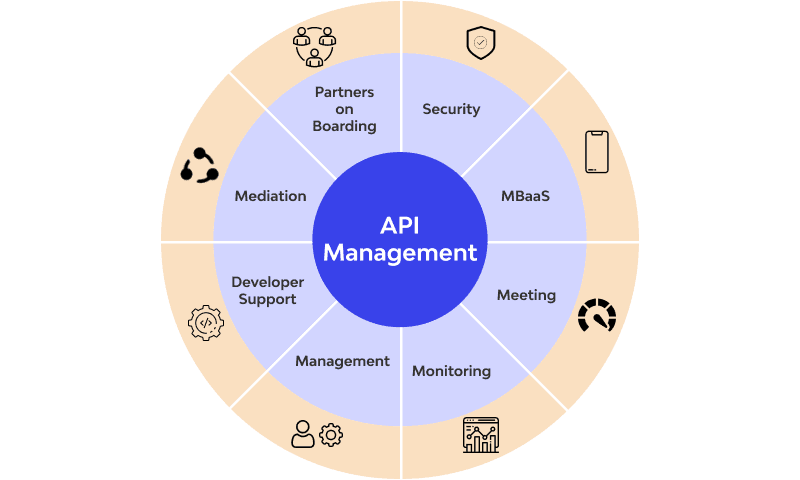
Solution: Implement an API-based security layer using Azure API Management and Web Application Firewall (WAF).
Performance Optimization vs. Security Overheads
Problem: Security measures can sometimes slow down DevOps processes.
Solution: Optimize pipeline execution by caching scan results & parallelizing security tests.
Securing Multi-Cloud & Hybrid Environments
Problem: Organizations often have a mix of on-premise, Azure, GCP and AWS infrastructure.
Solution: Implement various in-house and COTS products to provide a unified security management plane across environments.
Solutions & Best Practices Implemented
Shift-Left Security
Security is integrated early in development with pre-commit hooks & automated threat modeling.
Zero Trust Architecture
Identity & Access Management (IAM) principles enforced using Open Source IAM for Conditional Access.
Technologies Used
Azure DevOps
SonarQube
HP Fortify
HP Web Inspect
Black Duck
Nexus
Robot framework
SoapUI/Postman
MochaChai / Cucumber / Jasmine / Karate
JMeter
Java/Python
Ant/Groovy
Ansible
Conclusion
By implementing DevSecOps in the organization using Azure DevOps, we have successfully built a secure, scalable, and high-performing software delivery pipeline. This approach ensures continuous security compliance, faster time-to-market, and enhanced resilience against cyber threats, positioning the organization for long-term success.